|
|

|

|
TCDL Bulletin Applying Verification, Validation, and Accreditation Processes to Digital Libraries
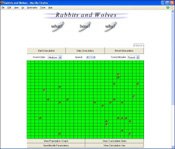
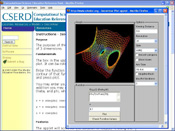
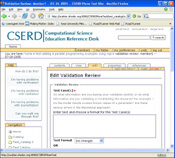
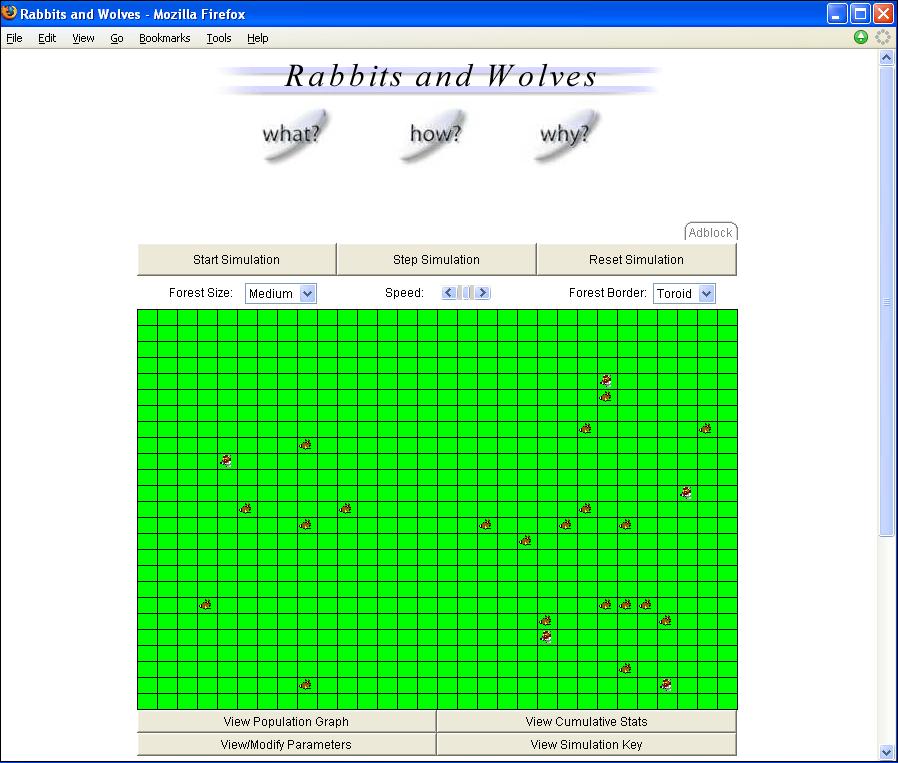
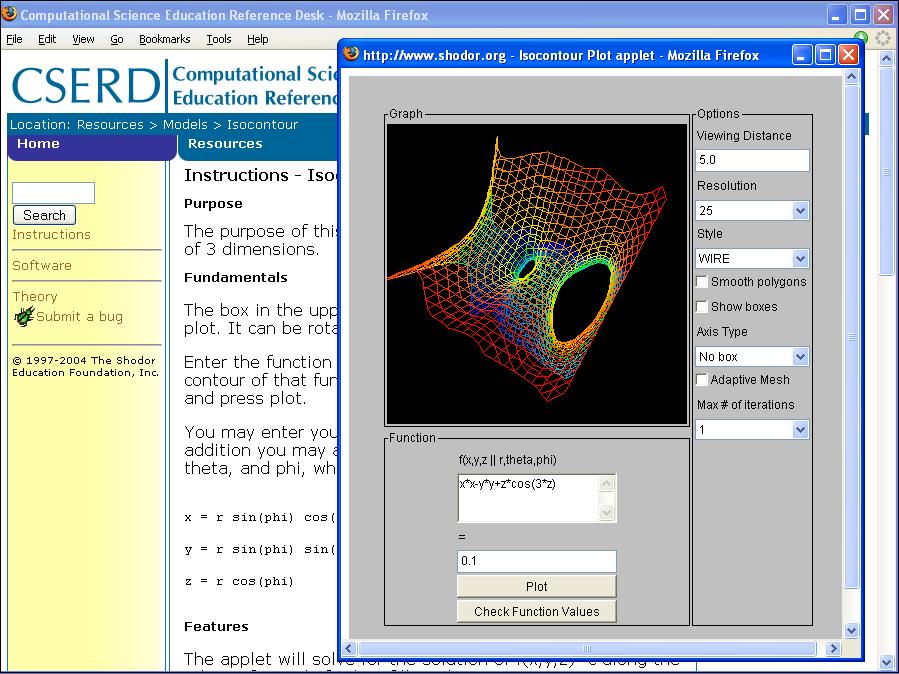
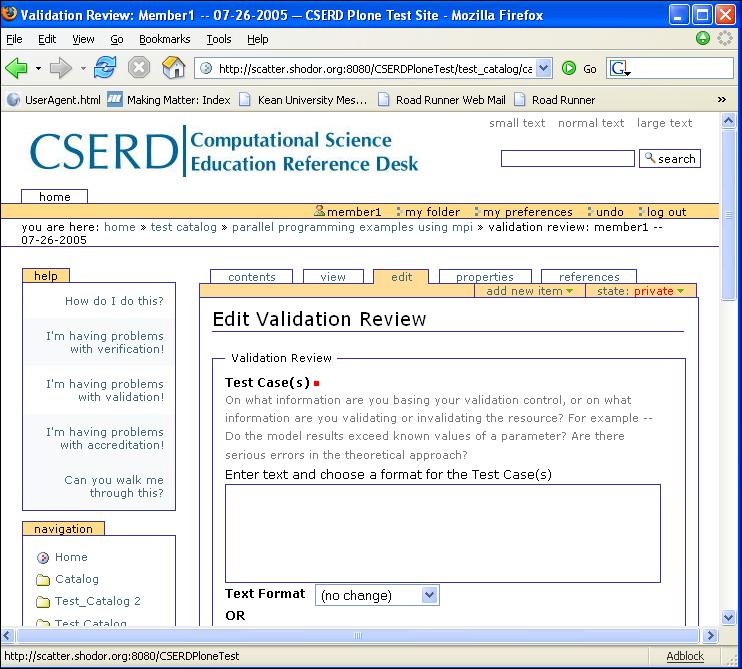
The Computational Science Education Reference Desk (CSERD), a Pathway project of the National Science, Technology, Engineering and Mathematics Digital Library (NSDL), is a collection of learning objects for computational science and engineering (CSE) and its role in STEM education. Typical learning objects in CSERD include simulations used to teach a science concept, such as the predator-prey simulation in Figure 1 or simulations of computational science concepts, such as the isocontour generation tool in Figure 2. The number and variety of such objects on the web are growing, with little control over the quality of the objects. A consensus in the CSE community is forming over a workflow for determining the fidelity of simulations. This workflow includes three stages: verification, validation, and accreditation (VV&A). Verification addresses the question of whether the simulation is correct, implying that the simulation is bug free, mathematically sound, and scientifically justified. Validation addresses the question of whether the simulations is being applied correctly, implying that results are falsifiable and coherent with existing knowledge. Accreditation addresses the question of whether the simulation is useful, implying that it is documented, that educational materials are correlated to standards or course content, that materials are accessible, and that the educational use of the material is engaging. CSERD is creating metadata for VV&A, and is collecting this in the form of peer review of items in its catalog. A tool has been developed to manage this process using the open source content management system Plone, as seen in Figure 3.
© Copyright 2005 David Joiner, Steven Gordon, Scott Lathrop, Marilyn McClelland, and D.E. Stevenson Top | Contents |